
The Power of Symbols
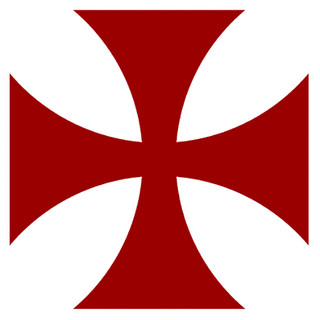

Why We Wear the Templar Cross
In a contested environment, symbols are never neutral. They communicate identity, intent, and power more clearly and more quickly than words. When a population faces an invasion, the visual field becomes part of the contest. What is displayed, where it is displayed, and by whom, shapes perception of who holds the ground. An empty visual field is not neutrality. It is a vacuum that organized forces fill.
Symbols as Operational Tools
Symbols serve four practical functions in any sustained contest:
• Identification. They allow people who share a purpose to recognize one another without constant verbal confirmation. In fluid public spaces this matters immediately.
• Cohesion. A shared mark reinforces discipline and mutual trust among those who choose organized, lawful presence over isolated reaction.
• Signaling. They declare that a group is present, organized, and unwilling to cede the public space by default. Absence of a signal is itself a signal.
• Morale. In a long contest, visible affirmation sustains the people who continue to show up when the easier choice is withdrawal.
Why We Wear the Templar Cross
The Templar cross is the mark of those who have chosen a civilian response to the invasion. It is worn so that people supporting the Mobile Prayer Van, members of Escort Ten, and others present at permitted assemblies can identify one another instantly. It is displayed so that the response is not invisible. When INVADERS occupy the visual field, an empty response cedes that field. The cross answers with a different claim: we remain, and we remain organized under a clear standard of local order and the Constitution.
This is not heritage for its own sake, nor is it fashion. In the context of an invasion response, the cross is operational. It is the simplest way to make the distinction between those who stand for the existing legal and social order and those who treat that order as optional. Wearing it converts individual presence into collective presence. Without the mark, each person is an isolated observer. With the mark, the same people become a recognizable formation.
INVADER Symbols Are Assertions of Power
When INVADERS wear and display their specific symbols in public, the act is not cultural expression. Culture is private practice, family custom, or voluntary association that does not assert dominance over shared space. Public display of INVADER symbols in the middle of an invasion is a deliberate demonstration of power. It is a claim, not a custom.
The power display works through several simultaneous assertions. First, it marks territory. A symbol repeated across a street, a storefront, a gathering, or a neighborhood communicates that the space is no longer neutral. Second, it tests reaction. Each unchallenged display measures whether the local population will accept the new visual order or will answer with its own. Third, it coordinates presence. The symbol lets INVADERS recognize one another and lets outsiders understand that the individuals are not acting alone. Fourth, it intimidates by implication. The message is that organized numbers exist and that those numbers are willing to be seen. Fifth, it normalizes the invasion itself. What begins as an isolated mark becomes, through repetition, the expected background of the public square.
Refusal to integrate and activities that undermine local or federal law are already the operational definition of the invasion. The symbols make that definition visible and persistent. They convert a set of behaviors into a standing claim on the environment. Treating those displays as mere culture is a failure to read the signal. The signal is control of the street, the neighborhood, and the public square. Culture does not require the host population to yield visual dominance. Power does.
Every uncontested display strengthens the assertion. The longer the symbols remain the only organized marks in a space, the more that space is perceived as already decided. Perception shapes behavior. Behavior shapes what comes next. This is why the display cannot be dismissed as harmless expression. It is an operational step in the invasion.
The Response
The answer is not to hide our own mark. Wear the Templar cross. Display it lawfully at permitted assemblies and in the ordinary course of civilian activity. Make the response visible so that those who share the purpose can find one another and so that the visual field is not left exclusively to the INVADERS. A counter-signal does not require confrontation. It requires presence and consistency.
Symbols do not replace action. They make action coherent. In a hypothetical invasion, coherence is the minimum requirement for any civilian response that intends to endure. When INVADERS use symbols to assert power over shared space, the organized response must use its own symbol to assert that the space remains contested and that the local order has not been abandoned.


Comments