
Humanity: A Blink in God’s Eye


When you look up at the stars, you’re looking at history. Light from distant galaxies has traveled millions—even billions—of years just to reach your eyes. The universe itself is estimated to be nearly 14 billion years old. Earth formed about 4.5 billion years ago.
But humanity? We’ve only been around for a tiny fraction of that time. If the universe’s entire lifespan were compressed into a single 24-hour day, humans would appear in the last second before midnight.
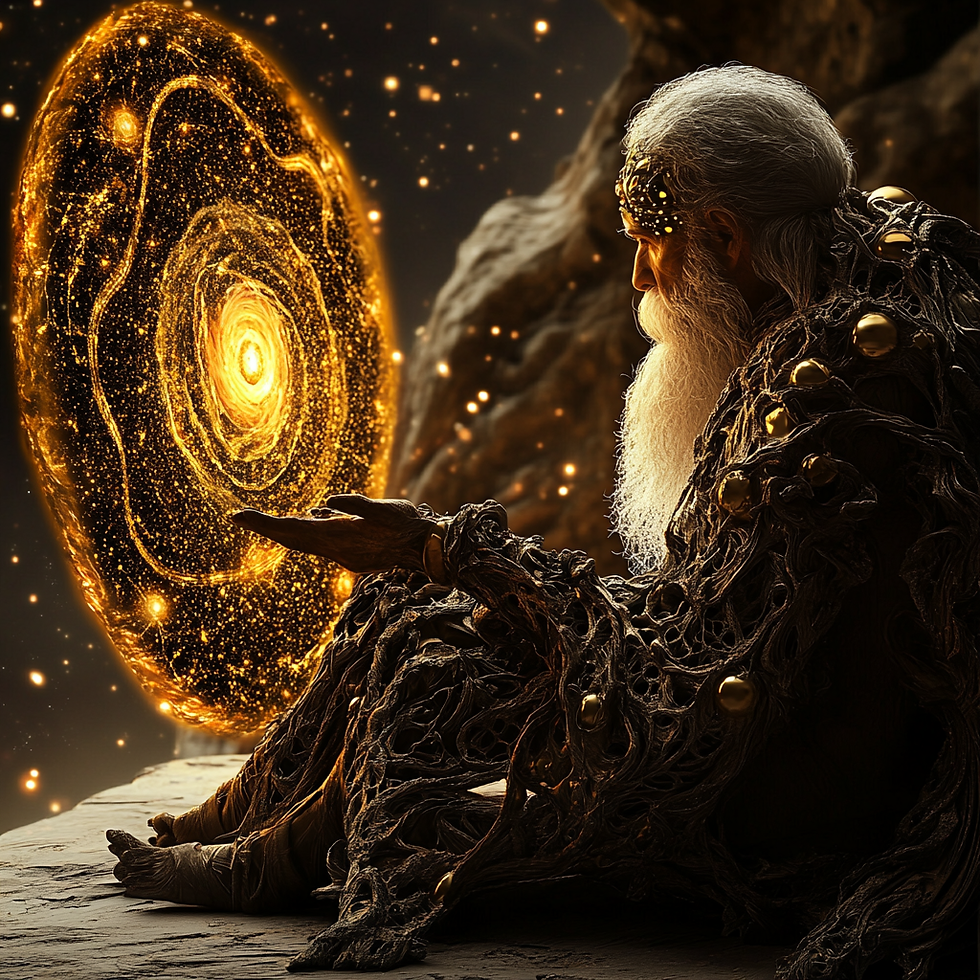
In other words: compared to cosmic time, we are late arrivals. Our existence is like a blink in God’s eye.
Why is Humanity So Late?
The question naturally arises: why did God allow so much time to pass before we appeared?Some might see this as proof that we are insignificant—just an afterthought in a vast cosmos. But the biblical perspective tells a different story.
The universe was prepared for us. The long ages before us were not wasted time; they were God’s preparation. Stars had to be born, burn, and explode to seed the cosmos with the heavy elements needed for life—carbon, oxygen, iron. Planets had to form. Ecosystems had to stabilize. Humanity arrived not too early, but right on schedule.
Patience is divine. What feels like eternity to us is a mere instant to God. The Apostle Peter reminds us: “With the Lord a day is like a thousand years, and a thousand years are like a day” (2 Peter 3:8). From God’s perspective, the gap between creation and humanity is no gap at all.
The Weight of Our Moment
If our existence is but a blink, does that make us meaningless? On the contrary—it magnifies the urgency of our moment.
Every choice matters. Our lives are brief, but eternity hinges on how we use them. Unlike stars or galaxies, we are moral beings, able to love, obey, rebel, repent. Our short time has eternal consequences.
The stage was set for Christ. Humanity didn’t just emerge whenever. We arose at the precise moment in history when cultures, languages, and empires had grown enough to carry the message of Jesus across the world. God’s timing is perfect.
Fragility highlights purpose. Because we are small and fleeting, it is all the more astounding that God notices us. The psalmist marveled: “What is mankind that you are mindful of them, human beings that you care for them?” (Psalm 8:4).
Our Calling in the Blink
If we see our existence in perspective, three truths emerge:
Humility. We are not the center of the universe. Billions of years and galaxies testify to God’s greatness, not ours.
Responsibility. Our blink of time is short. We must use it wisely to love God, defend truth, and serve others.
Hope. Though we are latecomers in creation, in Christ we are destined for eternity. Our blink leads into an everlasting dawn.
Conclusion
Humanity is recent, yes. But not irrelevant. In the vastness of space and time, God chose this moment for us to exist. Our lives are short, but our impact can echo forever. Seen in the light of eternity, our blink is not small—it is sacred.
Comments